Shabari's tasted berries
Shabari was an old tribal woman. Before he died, her guru, the sage Matanga, had told her, 'Rama will come. Wait for him.' Every day she rose before dawn, swept the path to the hermitage, laid flowers, and gathered wild berries. So that no sour one would reach Rama, she bit each berry to taste it and set it aside.
Years passed. She grew old. One day Rama and Lakshmana came, searching for Sita. With trembling hands Shabari offered the tasted berries. Lakshmana hesitated. Rama ate them one by one with delight: 'I have never eaten fruit so sweet.'
A prince, a Kshatriya: he saw no caste, no leftover, only love.
Takeaway: God does not look at the fruit, but at the heart that offers it.
Swipe up ↑
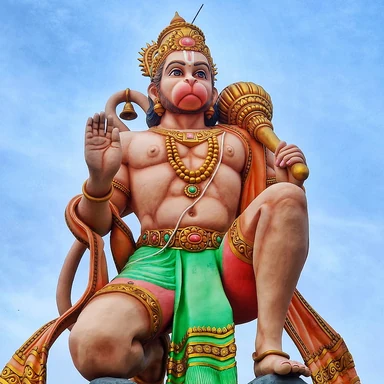
Hanuman and the pearl necklace
It was the day of Rama's coronation. Sita gave Hanuman a priceless pearl necklace. Hanuman began cracking each pearl with his teeth, looking inside, and throwing it away.
The court laughed. 'A monkey is a monkey; what does he know of pearls?' Hanuman said, 'Anything without Rama in it is worthless to me. There is no Rama in these pearls.'
'And is he in you?' someone mocked. Hanuman tore open his chest: there in his heart sat Sita and Rama. The hall fell silent. Rama rose, came down, and embraced him.
Takeaway: A devotee's wealth is not outside but in the heart.
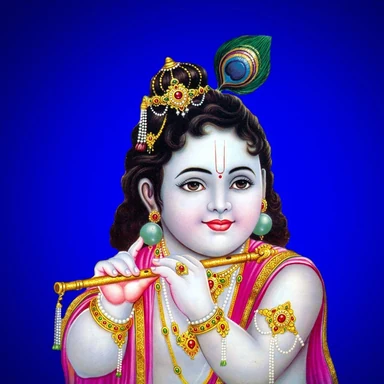
Sudama's handful of rice
Sudama was Krishna's boyhood friend; they had studied together at Sandipani's school. Now he was a poor Brahmin whose children had nothing to eat. His wife urged him, 'Go to Dwaraka, ask your friend.' She tied a handful of beaten rice in a cloth for him to take.
At Dwaraka the gatekeepers stared at the man in rags, but Krishna ran from his throne the moment he heard the name. He embraced his friend, washed his feet himself, and had Rukmini fan him. 'What have you brought me?' Krishna pulled out the bundle Sudama was hiding in shame and ate a handful; Rukmini stopped the second.
Sudama could not bring himself to ask for anything. He returned home to find a palace where his hut had stood. Krishna had given without being asked.
Takeaway: A handful given with love weighs as much as the worlds.
The one grain in the Akshaya Patra
In exile the Pandavas had the Akshaya Patra, the Sun's gift: it fed any number of guests until Draupadi herself ate, and then stood empty.
Duryodhana plotted. He sent the quick-tempered sage Durvasa with ten thousand disciples to the Pandavas' hermitage, after Draupadi had eaten. 'We will bathe and return; have the meal ready,' the sage said. The vessel was empty. A curse was certain.
Draupadi called on Krishna. He came and said, 'I am hungry; give me something.' Ashamed, she showed him the empty pot. A single grain clung to its rim. Krishna ate it and said, 'May all the worlds be satisfied.'
Bathing in the river, Durvasa and his disciples suddenly felt full. Not daring to return to the hermitage, they left from there.
Takeaway: One grain is enough for Krishna, if it is given honestly.
Tulsi sathi vipati ke vidya vinay vivek
Seven friends stand by you in trouble: learning, humility, judgement, courage, good deeds, truthfulness, and trust in Rama. With these, no hardship is faced alone.
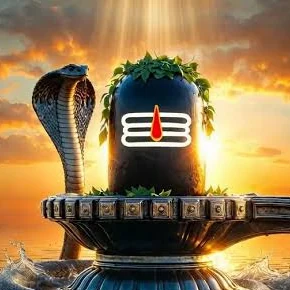
Kannappa, who gave his eyes
Tinnan was a hunter. In the forest he saw a Shiva linga and a love he could not explain rose in him. He knew no ritual. He carried water in his mouth and spat it on the linga: that was his abhishekam. Flowers carried on his head: that was his worship. Roasted meat was his offering.
The temple priest watched in horror from hiding. One day blood ran from the linga's eye. Tinnan tried herbs; nothing worked. 'An eye for an eye,' he thought, dug out his own eye with an arrow, and pressed it on the linga. The bleeding stopped.
Then the other eye bled. Tinnan laughed, placed his toe on the linga's eye so he would not lose the spot, and reached for his second eye. Shiva caught his hand: 'Stop, Kannappa!' and gave him both eyes back.
Takeaway: Even without knowing the ritual, it is enough to know love.
Markandeya, the boy who outlived death
Shiva gave the sage Mrikandu a choice: a foolish son who would live a hundred years, or a wise son who would live sixteen. The sage chose the wise one. Markandeya was born.
His sixteenth birthday drew near. Seeing his parents weep, the boy learned why, calmly embraced the Shiva linga, and began chanting 'Om Namah Shivaya'.
At the appointed moment Yama came. The boy would not let go of the linga. Yama threw his noose, and it wrapped the linga along with the boy. The linga split and Shiva came out in fury. With one kick he felled Yama; that is why he is called Kalantaka, the ender of death.
'This boy shall remain sixteen forever,' Shiva decreed. Markandeya became one of the immortals.
Takeaway: Even time cannot drag away one who holds on to Shiva.
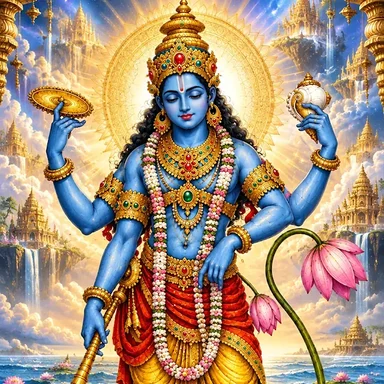
Ambarisha and the chasing discus
King Ambarisha was a great devotee of Vishnu. He had fasted on Ekadashi and was about to break it on Dwadashi when Durvasa arrived as a guest. 'I will bathe and return,' said the sage, and was late. The Dwadashi hour was slipping away. To keep his vow the king took only a sip of water.
Durvasa returned, raged 'You ate before me!', and from his matted hair created a demoness to kill the king. The king did not move. The Sudarshana discus that Vishnu keeps for his devotees burned the demoness and turned on Durvasa himself.
The sage fled to Brahma: 'I cannot help.' To Shiva: 'I cannot help.' To Vaikuntha, where Vishnu said, 'I belong to my devotee. Only he can forgive you.' A year later the sage fell at Ambarisha's feet. The king, still fasting, had been waiting for him all along.
Takeaway: Even God defers to His devotee.
Namdev runs after a dog with ghee
Sant Namdev of Pandharpur was roasting rotis by a forest road one day when a dog snatched one in its mouth and ran.
Namdev did not pick up a stick or shout. He grabbed his bowl of ghee and ran after the dog: 'Vitthala! Stop, Lord! The roti is dry; let me put ghee on it!'
Onlookers laughed. But Namdev saw only Vitthala in that dog; that was all he had, Panduranga in every creature. The dog stopped. The saint spread ghee on the roti and sat beside the dog until it had eaten.
That is why his abhangs say, 'Wherever I look there is only You; who else is there to see?'
Takeaway: See Him in everything, and where would anger come from?
Annamayya and the broken chains
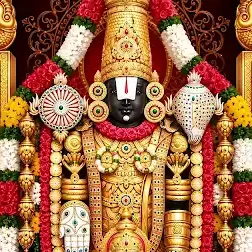
Annamayya wrote one song to Venkateswara every day, thirty-two thousand in his lifetime. Saluva Narasimha Raya, the king of Penugonda, heard him sing and was captivated: 'Sing one song about me.'
Annamayya refused: 'This tongue sings only of Hari. It does not praise a man.' The king, enraged, had him chained and thrown into prison.
In the cell Annamayya sang: 'In hunger, in exhaustion, the name of Hari is the only refuge; there is no other.' As the song ended, the chains fell off. The guards fastened them again; they fell again.
The king came running at the news and fell at Annamayya's feet. Annamayya went back to Tirumala and sang only of the Lord until the end.
Takeaway: No chain can hold a voice that sings for God.
Meera's cup of poison
Meera was a princess of Mewar, married into the royal house of Chittor. Yet the only husband she acknowledged was Giridhara Gopala. She left the palace to sing and dance with wandering saints in the temple. To the dynasty it was a disgrace.
Her brother-in-law Vikramajit sent her poison in a golden cup: 'This is Giridhara's charanamrita.' Meera took it for exactly that. She held it up to Krishna's image, smiled, and drank.
Nothing happened. She went on singing. They say the image's face turned blue; He had drunk the poison.
A snake sent in a flower basket became a garland. A bed of nails became a bed of flowers. At last, it is told, Meera reached Dwaraka and merged into Krishna's image.
Takeaway: Where there is faith, even poison is nectar.
Rama and the squirrel
The bridge across the sea was being built. Monkeys tore up hills and hurled them into the water; stones marked 'Rama' floated.
A small squirrel was working too. It rolled in the sea, rolled in the sand on the shore, then shook the grains onto the bridge. Back to the water, back to the sand.
A monkey laughed and tossed the squirrel aside: 'Stay out of the way!' It landed near Rama's feet.
Rama lifted it onto his palm and said, 'Its sand is filling the gaps between the stones. No work is big or small; only the love in it counts.' He stroked its back fondly. Those three stripes are on every squirrel's back to this day.
Takeaway: Put your whole love even into small work; Rama sees.
Rantideva's last cup of water
King Rantideva gave away everything he owned. Then famine came. For forty-eight days he and his family had neither food nor water.
On the forty-ninth day a little rice, ghee and water came to hand. As they sat to eat, a hungry Brahmin arrived; the king gave him a share. Then a Shudra: another share. Then a man with his dogs: all the rice that remained.
One cup of water was left. An outcaste came and said, 'I am thirsty.' Giving him the water, the king said, 'I want no kingdom, no heaven, not even liberation. Let everyone's sorrow come into me, and let them be free of it.'
Brahma, Vishnu and Shiva themselves had come as those guests. Rantideva had nothing left to ask; he was already with them.
Takeaway: Only when 'mine' is gone do you see that everything is His.
Baby Hanuman and the sun-fruit
Days after her son was born, Anjana went into the forest for fruit. The hungry baby saw the red sun rising, thought 'What a big fruit!', and leapt into the sky.
Son of the wind, he rose at the wind's speed. That day was an eclipse; Rahu was coming to swallow the sun. The child took Rahu for another fruit and chased him. Rahu fled in terror to Indra.
Indra came on his elephant and hurled the thunderbolt. It struck the child's jaw (hanu) and he fell on a mountain. In fury the wind god stopped the winds of the worlds. Gasping, everyone ran to Brahma.
The gods came, revived the child, and each gave a boon: no weapon could kill him, no fire burn him, he could take any form he wished, he would live forever. From the wounded jaw came his name: Hanuman.
Takeaway: Hanuman is the courage that sees the sun as a fruit.
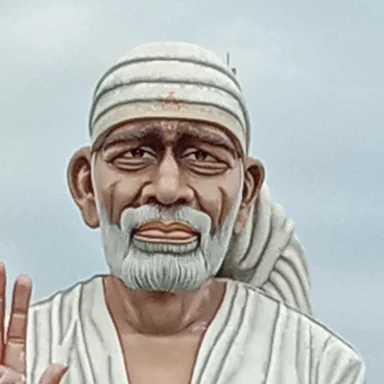
Sai Baba lights lamps with water
Every night Baba lit lamps in the Shirdi mosque. He would ask the village shopkeepers for oil, and they gave it.
One day the shopkeepers agreed among themselves: 'Why give this fakir free oil?' Each one said, 'No oil.' Baba went back without a word.
He poured water into the empty oil tin, drank some, poured the rest into the lamps, and lit the wicks. The lamps burned all night, on water.
The shopkeepers, watching from hiding, fell at his feet in fear. Baba said, 'Do not lie. If you do not want to give oil, say no. But do not say you have none when you have.' He did not curse them; he forgave them.
Takeaway: Speaking the truth is the only lamp-offering Baba asked for.
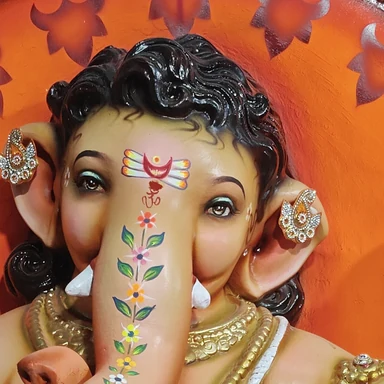
Ganesha goes around the world
Narada brought a fruit of wisdom to Kailasa. 'It must not be divided; one person must eat it.' Both Ganesha and Kartikeya wanted it.
Shiva set a contest: 'Circle the world three times; whoever returns first gets the fruit.' Kartikeya was off like lightning on his peacock. Ganesha was stout, and his mount was a mouse.
He thought for a moment, folded his hands, walked three times around Shiva and Parvati, and stood before them. 'Mother, Father, you are my world. Going around you is going around the world.'
When Kartikeya returned, the fruit was in Ganesha's hand. That is why he is worshipped first in every puja: not for strength, but for understanding.
Takeaway: To go around your parents is to go around the world.
Tulsidas and the snake-rope
Before the Ramcharitmanas, Tulsidas was an ordinary man, hopelessly attached to his wife Ratnavali. One day she went to her parents' home. Unable to bear it, he set out that very night.
Rain; the river in flood. A corpse floated by; he took it for a boat and crossed. From her window hung a snake; he took it for a rope and climbed.
Ratnavali was startled, then said: 'If you had half the love for Rama that you have for this body of bone and flesh, you would have crossed the ocean of birth long ago.'
That one sentence changed the man. Tulsidas left home. The same attachment, turned to devotion, became the Ramcharitmanas and the Hanuman Chalisa that millions read.
Takeaway: Turn attachment towards Rama and it becomes devotion.
Krishna at Vidura's house
Krishna came to Hastinapura as an envoy to prevent the war. Duryodhana laid out a feast of sixty dishes in the palace. Krishna said, 'One eats where there is love, or where there is need. You do not invite me with love, and I am not in need.'
He went to the small house of Vidura, the maidservant's son. Vidura's wife opened the door and, overcome with joy at the sight of Krishna, lost all sense. She peeled bananas, dropped the fruit on the floor and handed Krishna the peels. He ate the peels with relish.
Vidura came in, stopped her, and offered the fruit. Krishna laughed: 'The fruit does not taste like the peels she gave me, Vidura.'
Takeaway: Krishna does not want a feast; he wants love.
Prahlada: Hari in the pillar
The demon king Hiranyakashipu had one grievance: his son Prahlada never stopped saying 'Narayana'. He had the boy trampled by elephants, thrown from a cliff, fed poison, set in fire. Each time the child came out smiling.
At last the father roared, 'Where is your Hari? Is he in this pillar?' Prahlada answered calmly, 'He is. There is no place where He is not.' Hiranyakashipu smashed the pillar with his mace.
Out of it burst Narasimha, half man, half lion. At dusk, neither day nor night; on the threshold, neither inside nor out; with claws, not weapons, he slew the demon. Then the terrible form grew gentle the moment Prahlada came near, and took the boy onto his lap.
Takeaway: Wherever a devotee calls, God is there.
Dhruva, the boy who became a star
Five-year-old Dhruva went to sit on his father King Uttanapada's lap. His stepmother Suruchi pushed him away: 'To sit on the king's lap you should have been born to me.' His father said nothing.
To the weeping boy his mother Suniti said, 'There is one lap no one can push you from: Narayana's.' The boy went to the forest. On the way Narada met him and gave him the mantra 'Om namo bhagavate Vasudevaya'.
Dhruva did penance for six months, in the end holding even his breath. His stillness shook the worlds. Vishnu appeared. The boy had no words; the Lord touched his cheek with the conch and praise poured out.
'You shall have a place that never moves,' the Lord granted. To this day the Pole Star stands still in the sky, and every other star circles it.
Takeaway: Dhruva turned a rejection into resolve.
Gajendra: the single cry
Near Mount Trikuta the elephant king Gajendra was playing in a lake with his herd when a crocodile seized his leg. The elephant pulled; the crocodile pulled. In water the crocodile is the stronger.
The struggle, they say, lasted a thousand years. The herd left. His strength failed. Then Gajendra understood: no one in this world can save me. He raised a lotus in his trunk and cried out, 'O Source from whom this world was born!'
In Vaikuntha, Vishnu stood up. He did not tell Lakshmi; he did not wait for Garuda; he ran. The discus split the crocodile, who was a cursed Gandharva, and he too was freed.
Takeaway: Surrender begins where your own strength ends.
 BhaktiVed
 Ram
Story