 BhaktiVed
About the temple
A Divya Desam at about 3,700 m in the Himalayas. Pilgrims bathe under the 108 spouts of the Muktidhara and in two kunds before darshan. The nearby Gandaki is known for saligram stones, and the shrine is sacred to Buddhists too.
The legend
Darshan here is believed to grant liberation (mukti), hence the name.
What makes it special
- Bathing under the 108 water spouts
- Saligram stones of the Gandaki
Main festivals
How to reach
- 🚆 Nearest railway station
- From India: Gorakhpur, crossing at Sonauli
- ✈️ Nearest airport
- Flight from Pokhara to Jomsom, then by jeep
Before you go
Indians need no visa but must carry a passport or voter ID. This is high altitude; take health precautions.
Darshan and seva timings change with the season and festivals. Confirm them with the temple's official website or office before you travel.
Stotras for this deity
All stotras →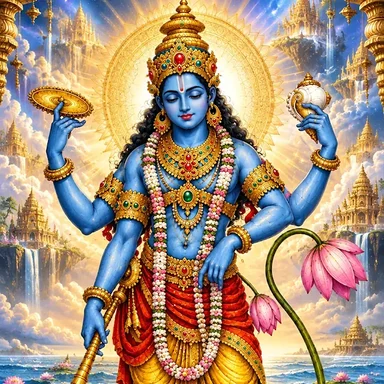
Frequently asked questions
Where is Muktinath (Saligram Kshetram), Nepal?
Muktinath (Saligram Kshetram), Nepal is in Muktinath valley, Mustang, Nepal.
Who is the presiding deity at Muktinath (Saligram Kshetram), Nepal?
Sri Muktinarayan (Srimurti Perumal).
How do I reach Muktinath (Saligram Kshetram), Nepal?
Nearest railway station: From India: Gorakhpur, crossing at Sonauli. Nearest airport: Flight from Pokhara to Jomsom, then by jeep.
What is the best time to visit Muktinath (Saligram Kshetram), Nepal?
March to June, September to November.
What are the darshan timings at Muktinath (Saligram Kshetram), Nepal?
Darshan and seva timings change with the season and festivals. Confirm them with the temple's official website or office before you travel.